












.png)
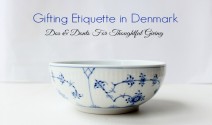
Kari Fagerlund and the Quiet Power of Danish Ceramic Vessels
In a small studio in Nørrebro, where Copenhagen mornings begin with the soft scrape of bicycles on wet cobbles, Kari Fagerlund shapes clay into vessels that feel less like objects than held breath. Her pieces carry a particular gravity — weighty enough to anchor a table, quiet enough to disappear until the light catches them just so. From the gallery-lined streets of Paddington to the weekend markets of Fitzroy, collectors are starting to recognise the kind of stillness her work holds, the way an empty bowl can carry far more than its shape suggests.
The exchange between Scandinavian makers and the Australian craft scene has grown richer over the past decade, fed by a shared appetite for slow goods. Kari's stoneware bowls, slip-cast jugs, and press-moulded vases have reached Melbourne shelves through independent importers who track studio pottery the way others follow fashion weeks. For Australians who care about provenance and the hand behind a piece, a Fagerlund vessel reads as both utilitarian tool and small treasure — the kind of object that packs neatly into checked luggage at Tullamarine and rewards a second look months later.
What sets her practice apart is a stubbornness about process. Kari returns to the same handful of shapes year after year, refining them the way a printmaker revisits a single etching. That discipline, paired with the crystalline light of long Danish winters, produces vessels that hold the patience of their maker. Australians visiting Copenhagen often slip into her open studio afternoons, drawn by the same instinct that pulls them to a ceramics trail through Tasmania's Huon Valley or to the Finders Keepers markets in Brisbane.
A Studio Built on Repetition and Listening
Kari's studio is a small rented room above a bakery on Frederiksborggade, where cardamom buns mingle with the metallic tang of damp plaster. She throws on a single wheel, wheels a single clay body — mid-fire stoneware from Bornholm — and fires to a single temperature in an electric kiln that hums through the night. The point, she has told visiting Australian retailers, is not limitation but clarity. When the variables shrink, the listening deepens.
Each vessel begins as a measured ball of clay, around 700 grams for a small serving bowl, sometimes closer to two kilograms for the floor pieces shown at her annual open weekend. She centres slowly, opens the form with a knuckle rather than a rib, and pulls the wall in incremental movements that leave faint throwing rings on the inside surface. Visitors from Sydney's Object Gallery or the kind of Melbourne designers who specify handmade pieces over catalogue imports often notice these rings. Kari treats the question as an invitation to talk about time, the way a hand leaves a trace without trying to.
She works alone most days, with help from a friend on glazing and a niece who photographs finished pieces against the studio window. Glazes are mixed in batches no larger than five litres, tested on bisque-fired tiles before they touch a pot. The palette has narrowed to soft ash, deep slate, raw umber, and an almost-transparent white that lets the clay's iron specks rise like freckles. To an Australian cook who has learned the pleasure of a proper salt cellar — the sort of thing you might pick up at the JamFactory shop in the Adelaide Hills — that kind of surface work separates a vessel from a mere container.
Form, Surface, and the Vocabulary of Calm
A Fagerlund vessel speaks a language of soft edges and unforced weight. Her bowls tend to be wider than they are tall, with a slight inward curve at the rim that holds the gaze the way cupped hands hold water. Jugs carry a tilted spout and a small thumb-rest on the handle, sized for a hand that grips rather than carries. Vases — perhaps her most collected forms — stand on a thick footring, narrowing before opening into an asymmetric mouth that nods slightly to one side, the way wildflowers rarely grow straight.
Surface treatment is where her patience becomes visible. The exterior of many pieces is left partially unglazed, sanded back to a matte skin that responds to light the way raw porcelain refuses to. Glaze drips are welcome, even encouraged; she calls them the clay's handwriting. Inside, a food-safe liner glaze coats only the working surface, leaving the outer wall breathable. For Australians accustomed to the bright oxide colours of Bilgola potters or the terracotta tradition of imported Staffordshire stoneware, the restraint feels unfamiliar at first, then quietly addictive.
She resists the word minimalist when asked. Her pieces are not stripped back, she insists, but selected. Each curve is a decision kept, a hundred others dropped. That philosophy extends to small batch sizes: a vessel is released only when its shape has settled, and it may appear for one season, then quietly retire. Collectors learn to move quickly, the same way Australians watch for limited drops from Mud Australia in Marrickville or the seasonal runs at Northcote Pottery Supplies.
Vessels in the Danish Design Story
Denmark has long treated the vessel as a serious cultural object, not a decorative afterthought. The legacy of artists like Axel Salto, Gertrud Købke Vasegaard, and later Anne Marie Trolle Christensen set a stage where handmade ceramics were understood as part of daily life rather than museum artefacts. Kari studied briefly under a pupil of one such lineage and keeps a small collection of mid-century studio pottery on a shelf above her wheel, used as reference rather than reverence.
The current wave of younger Danish ceramicists — many trained at the Royal Danish Academy or Design School Kolding — has refreshed this lineage with looser forms and raw edges. Kari sits comfortably among them, though her own work tilts more disciplined. Where a peer might splatter glaze like a contemporary abstract painting, Kari prefers the controlled bleed of wood ash over a polished rim. The lineage matters to her Australian collectors, who often arrive at her work through an interest in Scandinavian modernism and find her vessels as a way to bring that ethos into the kitchen.
For Australian designers building around something other than flat-pack veneer and mass-produced décor, her pieces offer a foothold. They sit well beside the raked gravel of a Japanese-influenced courtyard in Brisbane's New Farm, beside a linen curtain drawn against a Fremantle afternoon, beside the washed-oak benchtop of a renovated weatherboard in Sydney's Inner West. The vessels become the counterweight to softer textures, the structural note in a room tuned to quiet.
Finding Kari's Work from Down Under
For Australian readers keen to start a collection, Kari releases her work in small drops through her online shop and a handful of stockists in Copenhagen, Berlin, and Tokyo. Shipping to Australia is doable but rarely cheap. Pieces are wrapped in crumpled newsprint and packed in reused cardboard boxes, adding to the cost. A medium-sized bowl, fully insured and sent by courier, will often land between 280 and 380 Australian dollars once duties are settled.
A growing number of buyers combine a trip to Copenhagen with a studio visit, timing the annual open weekend in late spring when the light lingers past ten at night. Others rely on Australian importers who travel through Scandinavia twice a year, returning with carry-on suitcases of carefully packed vessels. Galleries like In Tandem in Carlton, and the slow homewares section of certain Sydney concept stores, occasionally carry one or two pieces, though supply is famously thin. Subscribing to Kari's newsletter is the most reliable way to hear about a new drop before the pieces disappear.
For those who cannot travel or wait, the patience required is part of the deal. A Fagerlund piece arrives with a story already baked into it — the clay, the kiln, the hand that pulled the wall. Australian buyers who treat the wait as part of the acquisition usually end up the most satisfied, the way the best cookbooks are borrowed from a friend and never quite returned.
Why a Vessel Still Matters
It is easy, in a market flooded with mass-produced homewares, to ask whether a handmade vessel still earns its keep. The answer in Kari's work sits somewhere in the touch of a rim, in the coolness of unglazed clay against your lower lip when you drink morning water, in the way a bowl cradles stone fruit without wobbling on a wonky table. These are small sensory pleasures, but they stack up. Over a year, the vessel that was a thoughtful gift becomes a daily companion, then a fixture, then a fixture with a memory attached.
That is the gift logic worth holding onto: not the gesture of giving, but the gift that keeps giving back. A ceramic vessel does not become obsolete. It wears in, softens, picks up the cooking oils of your kitchen and the marks of whoever pours from it. For an Australian reader thinking about what to give someone who already owns most things, a Danish stoneware bowl from a Copenhagen studio is a modest, useful, slow kind of answer.
If Kari's vessels have a single lesson, it might be that restraint is its own form of generosity. She makes less so each piece can carry more. Australians who collect her work often describe the same shift: a kitchen that gradually becomes a quieter room, a table that begins to feel curated without effort, a shelf where every object has earned its place. The vessels do not shout. They simply sit, and the room leans in a little closer.
Keep up with Kari's seasonal drops, occasional essays on making, and small studio updates by joining the readers who get a quiet note from Sarita whenever something new arrives. subscribe