









.png)
A Copenhagen glassblowing try-out makes a gift worth remembering
For Australians who have moved beyond the usual gift hamper of socks, candles, and a decent bottle of red, experience gifts are quietly taking over the birthday calendar. A session in a Copenhagen glassblowing studio, where the recipient actually shapes molten silica with a long iron blowpipe, lands in that rare category of present that someone remembers five years later. It is a story to tell, a piece of physical proof to display on the shelf, and a passport stamp earned in the process.
A try-out workshop is also a soft way to give someone a holiday. Most Australian gift-givers already know the cost of flights to Europe, so wrapping an afternoon in a Nordic atelier feels generous without crossing into grand gesture territory. The session itself runs between two and four hours, the studios sit within easy reach of Nørreport and Christianshavn, and the paperwork can usually be arranged in English over email weeks in advance.
Why experience gifts keep outperforming parcel-wrapped ones
The gifting market in Australia has shifted hard toward experience-led purchases over the past decade. Walk into any Westfield in Parramatta or Chadstone and you will see gift cards for indoor skydiving, cooking masterclasses, and pottery wheel tributes sitting next to the fragrance counters. The shift reflects a wider cultural move away from clutter, particularly among younger gift-givers in Sydney and Melbourne who have less floor space and more disposable income than previous generations.
There is also the memory dividend. Cognitive research keeps pointing to the same conclusion: people recall experiential purchases more vividly than material ones, and the recollection strengthens over time rather than fading. A glassblowing session in Copenhagen is a particularly dense memory because it hits so many senses at once, the roar of the furnace, the surprising weight of the punty, the smell of wet cedar moulds, and the moment the finished piece is cracked off the pipe.
For the person receiving the gift, the appeal is partly the destination. Copenhagen has spent the last decade building a reputation as one of the most liveable cities on the planet, and tying a creative workshop to a long weekend in Vesterbro gives the recipient something to plan around. The gift becomes a holiday with a craft project bolted on, rather than a workshop that happens to sit in an interesting postcode.
Inside a Copenhagen glassblowing try-out
A try-out session is not a silent meditation. It is loud, slightly chaotic, and surprisingly social. Most studios in the Danish capital run small groups of four to eight participants, with one or two master glassmakers guiding each person through a fixed sequence of moves. The glass gathers at the end of the blowpipe, the instructor calls the timing, and everyone rotates through the same stations so the studio can manage safety in a tight space.
By the end of the session, participants usually leave with one or two finished pieces. Some studios focus on simple forms like tumblers and small vases, others allow slightly more ambitious shapes like a round paperweight with coloured swirls folded inside. The instructors do most of the heavy lifting with the bench and the jacks, but the participant makes the decisive moves: when to blow, how hard to swing, and how long to keep the piece spinning before it sets.
The atmosphere is unhurried in a way that feels distinctly Scandinavian. Tea and coffee appear without ceremony, the music is usually something low-key in the corner, and the instructors speak in the measured, dry-witted tone that Danes use with visitors. It is the opposite of a rushed tourist attraction, which is part of why it works as a gift. The recipient feels welcomed into a working studio rather than funnelled through a performance.
The slow craft behind the Nordic tradition
Danish glass carries more than a hundred and fifty years of design history. Names like Holmegaard and Kastrup have shaped how Northern Europeans drink water, serve aquavit, and decorate their windows since the late nineteenth century. Modern studio glass in Copenhagen draws on that lineage without being enslaved to it, and the best workshops treat the session as a small lecture on the back story.
The instructors will usually pause to explain how silica sand becomes a workable gather, how colour is added in the form of crushed oxides, and how each piece must be cooled slowly in a kiln over twelve to eighteen hours to avoid cracking. That cooling window explains why most studios ask participants to return the next day or arrange courier shipping for finished pieces. There is no shortcut, and that patience is part of the appeal for Australians used to same-day everything.
The result is a piece that carries a sense of place. A small tumbler blown in Copenhagen feels different from one mass-produced in Tuscany or fired in a suburban ceramics class in Brunswick. The grain, the weight in the hand, the way it catches the late afternoon light through a kitchen window in summer, all of it points back to a specific afternoon in a specific studio.
Taking home more than a paper receipt
The practical side of gifting a glassblowing session is the bit no-one talks about at the planning stage. Australians flying back through Changi or Singapore need to think about how a delicate, hand-blown piece will survive twelve hours spinning around a luggage carousel. Most studios offer shipping for a reasonable fee, and that is usually the right answer. The pieces arrive in foam-lined boxes a few weeks later, often with a small certificate noting the date and the name of the instructor who supervised the blow.
For the recipient, that shipping box becomes part of the gift. Opening it a month after the trip, with a friend or a partner leaning over the kitchen bench in Adelaide or Perth, is its own small ritual. The piece is not just a vessel, it is a piece of dated memory. People tend to remember the exact trip tied to a particular glass because the object holds a date that no photo album quite matches.
Some gift-givers take the practical side further and book the session near the end of the trip, so the finished piece can be hand-carried home. That usually means scheduling the workshop for the last morning or arvo before flying out, with the piece cradled in a scarf inside a carry-on. It is a small extra step, but it removes the wait and the risk.
Pairing a hand-blown piece with fellow Nordic finds
Glass rarely lives alone on a shelf. A single hand-blown tumbler on a kitchen counter looks slightly lonely, and most gift-givers end up thinking about what else might sit beside it. Nordic design tends to reward restraint, so the pairing should be small and considered rather than crowded. A linen tea towel from a Copenhagen concept store, a copper stirring spoon, or a hand-thrown ceramic saucer all belong in the same visual family.
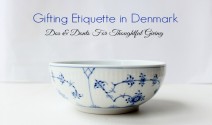
Coffee lovers tend to be the easiest people to buy for, because the world of small Nordic kitchenware is deep and beautiful. A hand-blown tumbler pairs naturally with a thoughtful set of espresso cups and saucers, the kind of tactile, slightly imperfect ceramics that the Danish design world has done so well over the last twenty years. Pulling both pieces together turns one workshop session into a small, coordinated still life on a kitchen bench.
If the recipient is more of a tea drinker or simply prefers a quieter ritual, a small glass teapot or a stack of hand-pressed saucers will do the same job. The point is not to flood the home with objects but to build a tiny cluster around the memory of the workshop.
Where Australian tastes meet Scandinavian minimalism
Australian interiors have been quietly adopting Scandinavian restraint for years, long before the trend showed up on Grand Designs. A renovated workers cottage in Fitzroy with exposed brick and plywood shelving is essentially the Antipodean cousin of a Copenhagen apartment in Østerbro. The same instinct drives both: warm timber, soft textiles, plenty of light, and a single well-made object on every surface.
A hand-blown Copenhagen glass fits that aesthetic almost too perfectly. Set it on a windowsill in a Bronte apartment where the morning sun comes in low across the harbour, or on the ledge of a Brunswick terrace where the afternoon light is filtered through a peppercorn tree, and the piece earns its place within a week. It also photographs well, which matters more than anyone wants to admit when a gift lands on someone's birthday Instagram story.
There is a deeper cultural alignment too. Australian gift-givers have always prized stories over price tags, and the Nordic design world tells better stories than most. Buying a glass that was blown by hand in a Copenhagen studio lets the giver wrap a small piece of Danish craft tradition into a present that will sit on a shelf in Sydney or Perth for decades.
Booking the trip and making the most of a long weekend
Most studios in Copenhagen run sessions year-round, with a slight summer peak in July and August. Bookings open around six to eight weeks in advance and tend to fill up around weekends, so planning ahead matters. Sessions are typically held in English, with a few studios also offering Danish-only options for more advanced work, and the price for a try-out session usually lands in the mid-hundreds of Australian dollars once shipping is included.
The best way to frame the gift is as the centrepiece of a long weekend in the Danish capital rather than a standalone workshop. Fly into Kastrup on a Thursday evening, spend Friday exploring Torvehallerne and the Designmuseum Denmark, book the glassblowing session for Saturday morning, and wander through the studios and galleries of Vesterbro afterwards. It is a tight, generous, deeply Copenhagen itinerary that rewards someone who already loves the city, and quietly converts someone who has never been.
Australians planning the trip can also fold in a side visit to the local glass scene, which is far more substantial than most travellers realise. Canberra Glass Studios in the capital and a handful of independent studios in inner Melbourne continue a small but dedicated glass tradition that mirrors what is happening in Denmark. Returning home with a Danish piece alongside an Australian one turns the gift into a quiet conversation across hemispheres.
If you are looking for a gift that asks for a little imagination and gives back a great deal of memory, a Copenhagen glassblowing try-out is hard to beat. Have a look through the rest of the Orange Gift Bag for other experience-led recommendations and pairing ideas, and start sketching out a long weekend that the recipient will be talking about for years.