








.png)
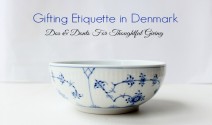
Gift a slice of Copenhagen: a private Danish pastry-making class
There's something quietly subversive about gifting an experience rather than a parcel wrapped in ribbon. Australians, who travel more per capita than almost any other nation, have long understood that a memory shaped with one's own hands tends to outlast a thing that gathers dust. A weekend in the Blue Mountains, a hot-air balloon over the Barossa, a cooking school in Hanoi — these are the presents friends tend to recount years later. Yet for someone who already owns a reasonable amount of stuff and would rather collect skills than objects, the right kind of experience can feel almost decadent in the best possible sense.
That is the appeal of a private Danish pastry-making class held in Copenhagen. It folds travel, gastronomy, and craftsmanship into a single morning or afternoon, and it leaves the recipient with the kind of quiet confidence that comes from having wrestled with laminated dough and won. For Australians sitting in a suburb of Sydney, Perth, or Brisbane, booking one for a loved one feels both generous and quietly romantic — a way of saying, "I thought about what you'd actually love."
Why a hands-on class lingers longer than a wrapped present
Research out of the United States has circulated widely enough that Australian readers will have come across it: people tend to derive more lasting happiness from experiences than from possessions. There is, however, a subtlety that gets lost in the repetition of that finding. The experiences that resonate are not passive ones — not a hotel stay, not a concert ticket. They are the ones that ask something of you, that hand you a tool and invite you to attempt something that previously seemed out of reach.
A private pastry class fits that description precisely. The student arrives as a consumer of flaky, buttery wienerbrød and leaves as someone who understands, at a felt level, why the butter has to be cold, why the dough has to rest, and why the folding pattern matters. The transformation is small but real, and it tends to colour how the recipient approaches baking for years afterward. Several Melbourne food writers have written about how a single class in a foreign kitchen recalibrated their home practice; the same is true of a sourdough class in Tuscany or a pasta class in Bologna.
Then there is the sensory layering. The smell of cardamom in a Copenhagen kitchen in February, the click of a Danish oven door, the way a windowsill in Vesterbro catches the morning light. These details cannot be packaged, and they are exactly what a recipient tends to remember when they describe the gift months later.
What unfolds inside a private Copenhagen kitchen
Most private sessions run between three and four hours, which is the time required to complete a full batch of pastries from start to finish. Participants typically make two or three varieties — often a classic spandauer, a frøsnapper with poppy seeds and remonce, and something seasonal such as a kanelsnegl or a berry-topped spandauer in summer. The chef or host moves at the pace of the group, which means a private booking feels less like a lecture and more like a long conversation held over flour.
Equipment is provided. Aprons, rolling pins, dough scrapers, and bench knives all live in the kitchen, and most hosts include tea or coffee along with the pastries at the end. The language of instruction is typically English, which is reassuring for Australian guests, though a few words of Danish tend to creep in regardless — dej for dough, smør for butter — and that, too, is part of the charm.
A good class is not a demonstration. The student kneads, rests, laminates, shapes, and bakes. They leave with their own box of pastries to take back to a hotel or apartment, which means the immediate gratification of tasting what they made is built into the price. Some hosts offer a printed recipe card; others send a PDF afterwards so the techniques can be practised back home in a Brisbane rental kitchen or a Melbourne share house.
Meeting the bakers: the small studios and home kitchens behind the craft
Copenhagen's pastry scene is built less on grand patisseries than on a constellation of small operations. Many of the classes are run out of home kitchens in neighbourhoods such as Nørrebro, Frederiksberg, or the quieter streets around Amager. A handful operate from shared studio spaces attached to bakeries, where students can watch a working kitchen hum while they shape their own dough.
What unites them is the standard. Danish pastry is a regulated craft in Denmark — there is, in fact, a formal vocational training pathway for bakers and confectioners — and the instructors tend to take it seriously without taking themselves too seriously. They will insist on the correct temperature of the butter and the right number of turns, but they will also laugh when a fold goes sideways and help rescue it. A few well-known hosts have built small reputations through Instagram, which is often how international bookers find them, while others rely almost entirely on word of mouth through platforms like Airbnb Experiences, GetYourGuide, or direct enquiries through a personal website.
For Australians arranging the gift, this means a degree of vetting is useful. Reading recent reviews, checking that the host communicates in English, and confirming how many people the booking covers are the small practicalities that separate a smooth surprise from a logistical headache.
Booking from the other side of the world
The geography is, of course, the first hurdle. Copenhagen sits roughly fifteen thousand kilometres from Sydney, and direct flights take about twenty-three hours depending on the routing. A pastry class, then, is rarely the gift itself — it is the gift paired with a trip the recipient was already considering, or it is a deliberately extravagant present for someone who travels frequently for work.
From a practical standpoint, Australians tend to book through international platforms that handle currency conversion in Australian dollars, which avoids the awkwardness of a recipient being charged in kroner. The Australian Competition and Consumer Commission's rules around gift cards and vouchers mean that any booking confirmation should clearly state expiry, refundability, and what happens if the recipient cannot attend. Reputable hosts handle this without fuss, but it is worth checking.
Another consideration is timing. Copenhagen is eight hours behind Brisbane, ten behind Sydney during Australian eastern standard time, and the gap narrows by an hour or two when daylight saving shifts in either hemisphere. Most hosts are flexible about start times, but a 10am class in Vesterbro is 6pm in Melbourne and 8pm in Perth, which can matter if the booking is intended as a livestreamed moment rather than a private surprise.
Pairing the experience with a tactile memento
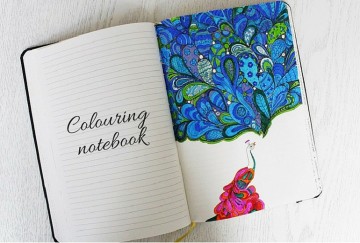
A purely digital gift can feel thin, even when the experience itself is rich. Many gifters solve this by adding a small physical keepsake — something that arrives ahead of the trip and builds anticipation. A notebook is a quietly perfect choice. The recipient can scribble observations during the class, sketch the fold patterns, and later paste in recipes. A well-considered journal tends to turn an experience into a story, which is part of why pages written in Copenhagen kitchens tend to be re-read years later. If a Danish design notebook feels like the right register, this a guide to Danish design notebooks for journaling walks through some of the better options.
Other pairings work, too. A small tin of cardamom, a Danish tea towel, or a single good linen apron all travel well in luggage and reinforce the theme without competing with the class itself. The point is to give the recipient something to unwrap so the morning feels ceremonial rather than transactional.
Who this gift suits and when to give it
The short answer is: anyone who would rather make something than receive something. The longer answer is more interesting. A private pastry class is a strong fit for a partner who has expressed, even casually, an interest in baking. It suits a parent marking a significant birthday — sixty, in particular, is a moment when experiences often feel more generous than things. It is also a quietly excellent wedding gift for a couple who already share a home and would prefer to accumulate memories rather than appliances.
The gift lands best when it is timed to a real occasion. A Christmas reveal in July, when Australians are midwinter and Copenhagen is heading into summer, has its own pleasure. So does a milestone tied to a planned Scandinavian trip, when the class becomes the anchor of the itinerary rather than an add-on. Less obvious windows — a long-service leave, a sabbatical, a recovery period after a major project — also work well, because they allow the recipient to choose a date that suits rather than rushing to fit one in.
Weighing a pastry class against other experience gifts
The table below sets a private Danish pastry-making class against a few other popular experiential gifts, with rough price bands in Australian dollars. Numbers shift with season and provider, so treat them as a guide rather than a quote.
| Gift | Approx. cost (AUD) | Duration | Best for | What the recipient keeps |
|---|---|---|---|---|
| Private pastry class in Copenhagen | $450–$850 per person | 3–4 hours | Travellers, food lovers, skill-seekers | Skills, recipes, memories, sometimes a small notebook of notes |
| Group hot-air balloon flight, Hunter Valley or Yarra Valley | $300–$500 per person | 3–4 hours including briefing | Adventurers, romantics, milestone celebrants | Photographs, the story, sometimes a flight certificate |
| Hands-on cooking class, Sydney or Melbourne | $150–$300 per person | 3–4 hours | Local foodies, date-night gifters | Recipes, leftovers, occasional apron or toolkit |
| Spa day with treatments, city hotel | $250–$600 per person | Half day | Someone who needs rest rather than stimulation | Relaxation, occasionally a product to take home |
| Concert or theatre subscription, annual | $400–$900 per year | Evenings across a season | Art lovers with a regular calendar | Tickets, programmes, a year of evenings out |
A pastry class sits at the upper end of typical experience-gift prices, partly because travel is implicitly built into the assumption that the recipient will fly to Copenhagen. For Australians without a Scandinavian trip on the horizon, the equivalent local options are strong — Melbourne's pastry scene in particular has matured enough that similar workshops exist — but they lack the foreignness that gives the gift its particular charge. The choice, ultimately, is between something local and excellent, and something distant and slightly mythic.
Worth exploring further are the guides and reviews on the Orange Gift Bag, where thoughtful experience pairings sit alongside small, considered objects for the people on your list.