













.png)
Gifts for students: Danish magnetic clips and note sets
Walking through Copenhagen's design shops a few autumns ago, I picked up two small magnetic clips from a corner shop near Strøget. They came in a kraft envelope, no plastic in sight, and have since travelled with me across three countries, a PhD application, and a small library of half-finished notebooks. That is the kind of staying power worth gifting to a student in your life, whether they are starting Year 7 in Sydney, swapping schoolies for their first share house in Brisbane, or settling into a co-working space in Carlton during a long exam block.
Danish stationery has a quiet way of feeling grown-up without trying too hard. The magnetic clips and note sets from Copenhagen-based makers balance usefulness with restraint, two things a study desk can never have too much of. If you have been searching for gifts for him that double as everyday study tools, the categories below are worth browsing once before you commit to the usual chocolate-and-mug bundle. There is something quietly generous about a present that earns its place on a desk rather than disappearing into a drawer by week three.
Why Danish stationery resonates with students in Australia
Australian students live within a rhythm that runs opposite to the Northern Hemisphere's. While European classmates return to class in September, Australian students are only just hitting the second half of the academic year in July, and they are usually deep into mid-term assessments or final exam prep. By the time a Year 12 student in Melbourne is sitting their final VCE paper in November, a Danish maker has often just released a new colour palette for winter. That timing gap actually works in a gift-giver's favour, because ordering a set now means it lands in time to be unwrapped just as the spring study grind starts at the beginning of February.
The other reason Danish pieces click with Australian students is the climate. Brisbane and Perth summers are humid in a way that warps cheaper paper stock, while Hobart and Canberra winters dry out leather-bound planners until the corners curl. The coated card and treated metal used by Scandinavian brands tend to handle these temperature swings better, which is a small thing until you are three weeks into a semester and your notebook pages are starting to wave at you across the desk. A gift that survives the weather is a gift that actually gets used.
Magnetic clips that earn their spot on a study desk
Magnetic clips do far more than hold sheets of paper together. The wooden and silicone-magnet versions coming out of small workshops in Frederiksberg double as photo holders on a fridge, bookmark backups on a thick novel, cable tamers behind a monitor, and emergency chip-bag sealers during a marathon study session. For a first-year university student sharing a kitchen with five flatmates in a Hallam share house, that last function alone is a small miracle on a Friday night.
Look for clips sold in pairs or sets of three rather than as a singleton. A single clip on its own tends to disappear into a pencil case within a week and never return. Sets also open up gift combinations: pair a wooden magnet clip with a slim metal bookend, or slide one into a small gift box alongside a pocket notepad. Names worth knowing include Menu, Design Letters, and the smaller workshop-based makers from Nørrebro whose pieces often surface at independent stockists further afield. A walnut or beech grain gives the piece warmth that plastic imitations simply cannot match.
Notepads and note sets for exam block
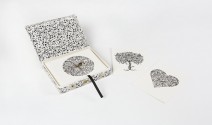
The little recycled-paper notepads from Danish stationers are built for what the Swedes call the skrivbord, the writing corner of a shared desk. They come in tear-off pad format, sticky-note format, and pocket-accordion format, and they are designed for the kind of mental scratchwork that does not belong in a proper notebook. For a student trying to revise for the UCAT or memorise organic chemistry cycles, having a stack of good notepads is a genuine study upgrade rather than a sentimental gesture.
What sets Danish note sets apart is the off-white tone of the paper, almost always unbleached, which is gentler on tired eyes during long revision evenings. A6 notepads fit inside most pencil cases and slip easily into a backpack on the bus to campus; A5 pads work better on a desk and hold more scribbling per page. If you can find a set bundled with a slim pencil or a refillable ballpoint, wrap that whole thing in unbleached cotton and you have a present that looks considered without costing much. A small detail like a sewn binding rather than glue can be the difference between a pad that falls apart by week three and one that survives the entire semester.
Building a study ritual around the gift
A good study gift does not get used once and forgotten. The best versions become part of a routine, the kind a student falls into without noticing. A magnetic clip pinned to the corner of a desk can hold a printed weekly schedule. A notepad within arm's reach becomes the place where every half-formed thought lands during a tutorial. The whole point of giving stationery is to give an unhurried tool, something that helps a nervous mind slow down during the inevitable November sprint towards ATAR results or final university deadlines.
If you know the recipient, try to colour-match the gift to their space. Most Danish makers release seasonal colourways: dusty blue, ochre, forest green, soft cream, and a warm terracotta that would sit beautifully on a Bondi share-house shelf or a sandstone rental in Adelaide. Pick a tone that fits the room they are about to move into, and the present carries a quiet thoughtfulness without ever needing a card attached. A receiving student will also be far more likely to keep a present out in the open if it visually suits the room they are sitting in for hours each evening.
Where to find Danish-made pieces in Australia
Stocking a Danish stationery gift in Australia used to mean a trip to a specialist importer in Melbourne's CBD or paying a small fortune for shipping from Copenhagen. These days, independent stationery shops in Sydney's Surry Hills, Brisbane's Fortitude Valley, Adelaide's Rundle Street, and Melbourne's Block Place carry curated Scandinavian ranges, and many of them have online stores that post within Australia for reasonable rates. Keep an eye on the smaller names that show up at design markets like Finders Keepers or the Sydney Indie Design Market, where Copenhagen-trained makers often bring their pieces on tour once a year.
The bigger retailers also do their part. Typo's seasonal stationery drops include paper clips and sticky notes inspired by Scandinavian design, and the price point is friendlier if you are gifting multiple students in one go. Officeworks stocks a basic range from Scandinavian names and can usually match a colour across clips, notepads, and pencils if you want a coordinated look without the import wait. For something rarer, Copenhagen-based webshops like Postable and Paper Collective ship to Australia, though the current exchange rate and shipping costs can nibble at the value of smaller orders under one hundred Australian dollars.
Wrapping and presenting without the plastic
The Danish habit of wrapping presents in unbleached paper, tied with cotton string, fits surprisingly well with the slow move away from shiny gift wrap in Australian homes and end-of-year school gifts. A single sheet of recycled brown paper from any newsagent, a sprig of dried rosemary from the garden, and a handwritten tag will carry the design language of the gift straight through to the unwrapping moment. Skip the cellophane bows and the glittered tags, since they will not survive the journey to a year-old share house in Brunswick anyway.
If you are posting the gift to a student in Sydney, Perth, or anywhere regional between them, pack the clips and notepads between two pieces of card so they do not bend in transit, and tuck the wrapping paper around them rather than stuffing everything into a separate gift bag. The objective is for the receiver to open something that still looks like it was thought about, not something that has been through Australia Post sorting three times in a soft mail satchel. A flat, square parcel wrapped in brown paper also travels cheaper, which is a small kindness to your own back pocket.
Choosing pieces that last beyond the semester
Year 12 graduations and ATAR result day come and go, but a well-made clip or a stack of decent notepads will keep showing up, semester after semester. I still have a wooden magnetic clip from a Copenhagen studio that has held everything from a printed manuscript to a toasted sandwich, and a notepad from a Frederiksberg workshop that sits on my kitchen counter in case a recipe or a phone number needs catching mid-week. That is the kind of quiet continuity worth gifting rather than a single-use novelty.
When choosing, focus on materials that age well: solid beech or oak magnets, brass or stainless-steel joints, recycled card for the notepads, and natural-cotton pencil rolls if you are including one. Skip anything with glued-on embellishments, printed-on vinyl, or metallic foiling that tends to peel by the end of the first semester. A piece that is built to be used will carry the giver's thoughtfulness further than a piece built to be admired and then filed away in a drawer until the next搬家 clean-out.
Pieces worth adding to a student gift box
- A pair of beechwood magnetic clips from a Frederiksberg or Nørrebro studio
- An A6 recycled notepad with a soft matte cover in a seasonal tone
- A brass-and-walnut memo holder for a desk edge or low bookshelf
- A slim refillable ballpoint or 0.5 mm pencil in a matching finish
- A boxed set of tear-off note pages for revision sessions and exam block
- A small linen pencil roll in oat or sage to keep the kit together
- A tin of unbleached sticky notes in three soft colours for marking readings
Browse a few of the smaller Australian stockists, pick a colour the student will actually live with, and start building the box this week. A short handwritten note tucked into the wrapping paper is the final touch, and it costs nothing but a few quiet minutes on a Sunday afternoon. The right piece of Danish stationery, given at the right moment, can quietly shape an entire study year and end up on the desk long after the semester has finished.