











.png)
The warm world of Mikkel Sommer's Risograph prints
Copenhagen has long been associated with clean-lined furniture and minimalist interiors, but the city also nurtures a quieter, more playful strain of illustration. Among the artists shaping that side of the visual conversation is Mikkel Sommer, a Danish illustrator whose small edition Risograph prints have travelled well past the Danish capital. His work sits in the gentle gap between comic art and observational drawing, with palettes that feel sun-faded yet carefully chosen.
For Australian readers who have only encountered his work on a passing screen, the prints reward a longer look. They reveal a process that is half-machine and half-hand, and a sensibility rooted in everyday objects: swimming pools, dusty cars, and quiet rooms. A short visit to his Risograph practice opens a window onto how a Danish illustrator builds a visual language one layer of ink at a time.
A brief path through Mikkel Sommer's drawing life
Mikkel Sommer trained as a painter at the Royal Danish Academy of Fine Arts, though his career tilted towards illustration quite early. He began publishing comic strips and small zines, then expanded into editorial work for magazines and album covers. The shift into Risograph printing came as a way to keep his prints close to the original drawings — unfiltered, slightly imperfect, and full of texture.
His early Risograph editions were short runs printed at small Copenhagen workshops and at independent studios in the Nørrebro neighbourhood. These were not glossy gallery pieces. They felt closer to a school poster or a riso zine passed between friends. That handmade quality remains at the heart of his output today, even as his audience has grown well beyond Denmark.
Australia offers a familiar home for artists who work this way. In Melbourne's Fitzroy and Collingwood, Riso studios run short edition drops that resemble Copenhagen's, and Brisbane's Pine Rivers Art Society has hosted workshops on analogue printmaking. The crossover between Denmark and Australia in this niche craft remains small but warm.
Why the Risograph press captures Sommer's eye
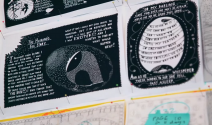
A Risograph machine prints one colour at a time, layer upon layer, much like a screen printer working on a concert poster. Each pull is slightly different, with tiny misregistrations and ink dustings that no digital printer can replicate. Sommer has spoken about embracing this imperfection — the way a face lands just a touch off-centre, the way a stripe of orange bleeds into a yellow field behind it.
For him, the medium is well matched to his subject matter. He draws old houses, sunlit porches, men smoking on balconies, children with bubbles, and animals resting in still pools. The faint grain and the dusty rose and eucalyptus greens of his palette lend the scenes a feeling of half-remembered summers. The aesthetic resonates strongly with Australian collectors who have grown up on similar pastel light in Sydney's eastern suburbs or along Adelaide's beaches.
The small edition print, sometimes as limited as fifty or a hundred copies, makes each piece an object rather than a reproduction. Buyers feel the weight of the paper, see the deckled edges, and notice the way the ink sits on the surface. The format invites a tactile relationship that flat downloads on a phone simply cannot offer.
What the prints look like in person
Open a folder of Sommer's Risographs and a recurring cast appears. There are dogs stretched out on tiled floors, bicycles leaning against brick walls, fathers reading newspapers in courtyards. The line is confident but never clinical. Faces are soft and slightly surprised, like a Wes Anderson film shot on an old Super-8 camera.
His most recognised series follows swimmers in chlorine-blue pools, the palms of hands catching water, towels flung across lawn chairs. Another sequence trails a lanky young man through European streets, taking photographs, eating sandwiches, looking a little bored. The humour is dry rather than loud, and that restraint is part of why the prints travel — they feel at home above a timber sideboard in Brisbane as easily as above a Danish oak table.
Colour is where the Risograph process really shows. Sommer works in two or three colours per print — often a muted teal with a soft coral, or a dusty olive with a brick red. The overlaps create an accidental third hue where the inks meet on the paper. Collectors in Sydney's Surry Hills and Paddington have built walls of small Sommer prints, mixing his editions with local artists like Beci Orpin or the late stencil work of ghostpatrol.
Recurring motifs across his editions
A short list of subjects that turn up again and again in his Risographs:
- Swimmers caught mid-stroke in turquoise pools, with bubbles clinging to shoulders
- Children chasing soap bubbles across sun-warmed courtyards
- Dogs drowsing on cool tiled floors beside overturned sandals
- Teenage boys walking home with satchels slung low across their backs
The repetition is part of the appeal. A collector building a wall of small Sommer editions starts to recognise a gesture, a posture, a way of standing that runs through the work like a quiet thread. It gives a wall of otherwise separate prints a sense of family.
Where to find Sommer's work outside Denmark
Sommer's website lists a small stock of available prints, though the editions move quickly. Resellers, including Copenhagen's Torvehallerne market stalls and a few Nordic bookshops, often hold copies. The most reliable way to find them is through the artist's newsletter, where each drop is announced before the wider release.
Collectors further from Copenhagen can turn to a handful of trusted online shops. Brooklyn-based outlets in the US carry his prints, as do independent stores in Berlin and London. For readers holidaying along the Australian east coast, finding Sommer's work locally is easier than it once was. Australian riso studios such as Risolve in Melbourne and small print rooms in Sydney occasionally stock him alongside local names. Checking in with a print studio near you is often the most rewarding route.
Alongside his prints, Sommer is celebrated for children's books. Translated into multiple languages, these carry the same slow, sun-soaked spirit. For a reader building a small library of Scandinavian picture books in Adelaide or Perth, his titles sit perfectly on a shelf between a Swedish picture-book favourite and other Nordic names.
The collector's side of Risograph editions
Risograph prints occupy a sweet spot in the art market. They cost more than a poster but less than an original painting, which makes them a gentle entry into collecting. Buyers tend to be motivated by the pleasure of having something handmade on their wall rather than by investment.
Sommer signs and numbers his prints in pencil, and each piece arrives with a small description card. Editions of fewer than a hundred copies tend to appreciate modestly once they sell out, though the artist himself downplays the speculative side of the trade. He wants the prints to be lived with, not locked away in a drawer.
Habits worth practising when starting a collection
A few small moves make a big difference over the years:
- Confirm the print number against the certificate card that comes with each piece.
- Keep direct sunlight off the coral and teal editions, which can fade over time.
- Store unframed prints flat in an acid-free sleeve, away from humidity that warps paper.
- Treat small ink smudges as part of the medium rather than flaws, since they reflect the layered printing process.
If a print arrives with a barely visible crease or a touch of ink dust along the edge, that is part of the medium and not damage. Many collectors actively seek out pieces with visible misregistration because they signal the handmade process.
Comparing Risograph to other print techniques
Risograph prints are often grouped with screen prints and giclée reproductions, though the three processes differ in meaningful ways. A giclée is essentially a high-quality inkjet reproduction, sharp and colour-accurate but lacking the handmade mark. A screen print comes closer, with bold flat colour and visible hand-pulled texture, but it requires a different setup and tends to read louder and more graphic.
Risograph work sits between the two. It carries the flatness and limited palette of a screen print while remaining as intimate and slightly imperfect as a photocopied zine. That balance explains its appeal to contemporary illustrators who want their prints to feel authored rather than reproduced.
For gift givers, the distinction matters. A Risograph print from Sommer is neither a poster nor a reproduction — it is closer to a small original. That makes it a thoughtful gift for a friend settling into a new flat, for a parent building a calm hallway gallery, or for a collector who already owns plenty of framed art and needs something smaller for an awkward wall. The medium also pairs nicely with other nostalgic finds from travels to Copenhagen, and readers drawn to slow, analogue gifts might enjoy browsing Copenhagen vintage toy finds to round out a parcel.
Pairing Sommer's prints with other Danish gifts
The prints nestle well into a wider Danish gift basket. A framed Mikkel Sommer riso, a small square of Marabou chocolate, and a bottle of elderflower cordial make a charming parcel for a friend who has just left Copenhagen for a new city. The combination feels considered, and it travels well through Australia Post, especially for friends who once lived in Copenhagen and now live in Hobart or Geelong.
For readers who would rather build a more comprehensive Danish hamper, curated options sit alongside his prints. A close look at Danish gourmet food hampers shows how pairs of small Risograph editions, rye crackers, smørrebrød spice mixes, and a soft cotton tea towel can turn a print purchase into a warmer present.
Sommer's prints also sit happily next to other nostalgic objects from childhood — a wooden toy truck, a tin of pastels, or a small secondhand Polaroid camera. A hand-bound zine and a Risograph print from the same neighbourhood, wrapped together in brown paper, feel like a complete present ready for the post.
Browse the latest Sommer drops and Danish-inspired gift ideas on The Orange Gift Bag, and start building a wall — or a parcel — with a little of that Copenhagen calm folded into it. Subscribing to the print drops by email is the easiest way to catch a new edition before it sells out, especially for collectors in Adelaide, Perth, or Hobart who do not have a local riso studio on the doorstep.