













.png)
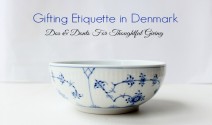
Copenhagen's best flea markets for vintage Danish pottery
From Sydney living rooms to Melbourne studios, the calm geometry of Danish ceramics has found a devoted following across Australia. Mid-century pieces by makers like Saxbo, Knabstrup, and Royal Copenhagen turn up in design blogs and on the shelves of curators in Paddington and Fitzroy, often commanding prices that make collectors wonder whether the source matters as much as the story. Yet the most rewarding pieces rarely begin their lives in glossy galleries. They come from weathered stalls in Copenhagen, where decades of careful use have left their glaze a little softer and their rims a little more honest. Learn more about Zi Xinganai Zi Fenwo Xuserukadouka Serufukonpasshonno Benwo Erka Yue Shi Jian.
This guide walks through the flea markets where vintage Danish pottery still surfaces with surprising regularity, with notes on what to look for, how to negotiate without offending, and what to expect when packing fragile finds for the long journey back to Australia. A handful of these markets run year-round, while others pop up only during the warmer months when Danes clear out their attics in earnest.
The quiet pull of mid-century Danish ceramics
Australians have always had a soft spot for Scandinavian restraint. The clean lines of Hans Wegner and Arne Jacobsen have long furnished terrace houses in Surry Hills and Brunswick, but the pottery that accompanied that furniture has its own quiet gravity. Studio potters working in the 1950s and 1960s produced pieces that were functional and philosophical at once, with glazes that shifted between moss green, oxblood, and the deep blue tones of faience.
What makes these pieces particularly appealing to Australian collectors is the way they age. Our bright light tends to expose anything fragile, so anything that has survived fifty years in a Copenhagen apartment has already proven it can last. That resilience, paired with a colour palette that pairs easily with the bleached timbers of a Queenslander or the brick tones of a Perth warehouse conversion, explains why demand has only grown. Sydney auction houses report steadily climbing prices on individual pieces, and small Melbourne dealers now keep waiting lists for their best examples.
Bakken and the surrounding weekend circuit
The area around Klampenborg, just north of central Copenhagen, hosts one of the city's most beloved weekend markets. The Bakken flea draws a mix of local families, serious collectors, and a steady stream of European day-trippers. Stalls are clustered under the beeches near the old amusement park, and pottery sellers tend to gather at the upper end, where the light filters softly through the leaves.
It is worth arriving early, ideally before the coffee carts start queuing. The first hour offers a calmer look through boxes of butter dishes, platters, and the occasional handled bowl, with prices that are noticeably gentler than anything you would find in the city's design district. Sellers are often downsizing their own collections rather than running a trade, which means the conversation tends to be relaxed and full of context. A mention of an Australian connection can break the ice, particularly if the seller has family in Melbourne or knows someone who emigrated to Brisbane in the seventies.
Frederiksberg's lively Sunday stalls
Closer to the city centre, the Frederiksberg market sprawls along a stretch of pavement that feels more like a street festival than a flea. It is louder and busier than Bakken, and the pottery is mixed in among vintage clothing, retro electronics, and mountains of old LPs. The density makes it harder work, but the rewards are often greater for those willing to dig. Turnover here is fast, partly because the surrounding neighbourhood is full of students and young professionals who treat secondhand shopping as a weekend habit.
Australians visiting in July will notice that this market is at its busiest during what is, for Danes, the heart of summer. Long evenings, school holidays, and a general mood of release all combine to push crowds into the streets. For visitors flying in from Sydney, where July means layering up for winter, the contrast is striking. Pack a light scarf anyway, because the breeze off the lakes at Sortedams can catch you off guard.
Sortedams and the second-hand scene by the lakes
The walk around the lakes in Copenhagen is one of the city's quiet pleasures, and several of the smaller markets cluster along their edges. Sortedams in particular has built a reputation for being a little more curated, with sellers who can usually tell you exactly which kiln produced a particular bowl. Prices reflect that expertise, but the selection is consistently strong, and the chance of finding a signed piece is meaningfully higher than at the bigger weekend events.
A practical tip for Australian travellers: bring cash in smaller denominations. Many sellers along the lakeside are private individuals who appreciate the efficiency of a quick kroner exchange, and the absence of a card surcharge keeps negotiations friendly. It also helps to learn a few Danish phrases, even simple ones. A good morning greeting in Danish, followed by an apology for the limited vocabulary, tends to win more goodwill than a confident switch to English. The willingness to step forward, recommend yourself as a serious buyer, and ask clear questions often makes the difference between browsing and buying. A short evening spent on personal confidence before the trip can transform a market morning from hesitant to genuinely rewarding.
Hidden courtyards in Indre By
Beyond the well-known markets, Copenhagen hides a quieter network of courtyard sales, particularly in the older parts of Indre By. These are not advertised in the same way as the big weekend events, and they tend to surface on community notice boards or local Facebook groups. The pottery that appears here is often the most personal. Estate clearances, family downsizes, and the gradual emptying of old apartments in the Latin Quarter all filter through these small gatherings.
For collectors based in Adelaide or Hobart, where Scandinavian vintage is harder to source locally, these courtyard sales are worth the extra effort to find. The pieces are usually priced conservatively because the sellers are not professional traders, and the provenance often comes with handwritten notes, old photographs, or a story about the aunt who threw the piece in her kitchen during the sixties. The conversation tends to wander through shared memories of the seventies, and an Australian visitor talking about the way these pieces sit in a Brisbane bungalow tends to find the seller suddenly more engaged.
Spotting authentic vintage among the reproductions
Fakes and reproductions have followed the boom in Scandinavian collectables, so a little knowledge goes a long way. Studio pottery from the mid-century period was almost always signed, often with an impressed mark rather than a printed logo, and the lettering tends to be slightly uneven in a way that modern reproductions rarely replicate. Weight is another clue. Genuine stoneware from makers like Saxbo or Knabstrup feels heavier than it looks, and the foot rings on a vintage piece are usually smoothed by hand rather than perfectly machined.
Glaze is the most telling element of all. A properly fired mid-century glaze has depth and a slight variation across the surface, particularly in the darker tones. Uniform, glassy finishes are usually a sign of a more recent production run, even when the styling looks correct. Australian collectors who have handled enough vintage work in local studios will recognise the difference instinctively, and that familiarity is one of the real advantages of coming to Copenhagen with a trained eye. The culture of experimentation in Australian pottery, from the wood-fired kilns of regional Victoria to the small studios in Fremantle, has produced a generation of buyers who can read surfaces with confidence.
For those new to the field, it is worth slowing down and asking questions, even if it feels intrusive. Most sellers are happy to share what they know, and many will gently steer a hesitant buyer away from a piece that does not quite ring true. Trust the conversation as much as the eye, and the market becomes a more enjoyable place to spend a morning.
Getting fragile pieces home to Australia
The hardest part of collecting vintage Danish pottery is often the return journey. Pottery that has survived half a century in a Copenhagen apartment can be undone by a careless baggage handler in Singapore or Dubai, so packing deserves real thought. Most experienced travellers wrap individual pieces in soft cotton clothing, then nestle them inside rigid containers that can be checked as a second bag. Some ship home through specialist carriers, particularly when buying larger quantities, and the cost is often less alarming than expected once you factor in the savings on individual prices.
Australian customs allow the import of secondhand household goods duty-free up to a reasonable threshold for personal use, though it is always worth checking the current allowance before travelling. Insurance through your home contents policy is another avenue, particularly for higher-value pieces. For Sydneysiders, the trip from the airport to a studio in the inner west is short, but those returning to regional centres may want to consider door-to-door freight instead. Whatever the route, the pleasure of unwrapping a piece of Danish pottery in an Australian kitchen, months after the morning it was first spotted under a beech tree, tends to justify every layer of bubble wrap.
If a trip to Copenhagen is not on the cards this year, the danish-gift-guide is a thoughtful starting point for understanding the makers, the styles, and the small details that distinguish a considered piece from a passing souvenir. Pair it with a slow browse through local Australian dealers who specialise in Scandinavian vintage, and the wait for an eventual trip becomes a little easier.