













.png)
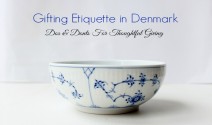
Danish ceramic trinket dishes for beautifully kept treasures
A small dish can make everyday rituals feel considered. Beside a bed, it gathers rings and earrings; near the front door, it gives keys a permanent landing place; on a desk, it holds paper clips, stamps or a favourite fountain pen. Danish ceramic trinket dishes with wavy rims bring this useful simplicity together with the gentle irregularity that makes handmade objects feel personal.
For Australian homes, these little pottery pieces are especially easy to live with. They suit compact apartment shelves in Melbourne, airy coastal interiors in Brisbane and layered, character-filled rooms in Sydney. Their scale also makes them approachable gifts when you want to send something beautiful without choosing a large, fragile or highly personal object.
Why the wavy rim feels so distinctive
The appeal begins with the edge. Instead of ending in a perfectly straight circle, the rim rises and falls in soft undulations, sometimes like a ribbon, a flower petal or a shallow ocean swell. This detail catches light across a glazed surface and gives the dish a pleasing silhouette when viewed from above. It also makes the piece feel less factory-uniform, even when it has been produced in a small coordinated collection.
The shape works particularly well with Scandinavian interiors because it adds softness to clean lines. A pale blue dish can break up a white bedside table, while a warm cream or sand-coloured version sits quietly with timber, linen and rattan. Glazes may be glossy, satin-like, speckled or deliberately uneven, so two dishes in the same colour can still have small differences in pooling, brush marks or texture.
That variation is part of the charm of studio ceramics. A wavy-edged jewellery dish is rarely intended to look like a flawless mass-market accessory. It is a modest object with evidence of a maker’s hand, which gives a practical item the presence of a small artwork. The best designs keep the rim comfortable to handle and the base stable enough for daily use.
A small expression of Danish design
Danish design is often associated with restraint, useful forms and a close relationship with natural materials. A ceramic catchall follows that tradition at a very accessible scale. It does not need a dramatic colour or elaborate decoration to hold attention; the curve of the rim, the weight of the clay and the quality of the glaze do the work.
In Copenhagen, ceramics are part of a broader creative culture that includes independent workshops, design studios, gallery shops and weekend markets. Many makers balance traditional wheel-thrown or hand-built methods with contemporary shapes. That is why a simple trinket tray can feel current without looking tied to a short-lived interior trend. Its usefulness gives it staying power.
For readers who enjoy discovering independent creative work online, Danish creative finds can provide another point of inspiration when considering artist-led objects and unusual gift ideas. A ceramic dish from a small studio may come with a more individual story than a department-store accessory, particularly when the maker explains the clay body, firing process or inspiration behind the form.
The Danish approach also makes these pieces easy to combine. A single wavy dish can stand alone on a dresser, while a group of two or three different sizes creates a relaxed arrangement. Try pairing one with a small bud vase, a framed postcard or a candle, leaving enough empty space for the display to breathe.
Choosing a dish for an Australian home
Start with the intended use rather than colour alone. For rings and earrings, a shallow dish with a clearly visible centre is convenient. For keys, coins or sunglasses, choose a slightly broader shape with enough weight to remain steady when items are dropped into it. A raised or softly folded rim can help prevent small pieces from sliding away, although it should not be so deep that jewellery disappears.
Dimensions matter when buying from overseas. A product photographed beside a hand can appear larger than it is, so check the measurements in centimetres and compare them with a familiar object at home. A dish measuring 10 to 14 centimetres across is often suited to a bedside table, while a larger tray may work better on an entry console. Remember that Australian furniture can be generous in scale, but many apartment hallways and bathroom shelves are surprisingly narrow.
Colour is another practical consideration. White, oatmeal, pale grey and muted blue tend to blend with Australian interiors that use timber, stone, wool and woven textures. Terracotta, olive and deep ocean tones create more contrast and can echo the landscapes around Adelaide, Perth or the Northern Beaches. If the gift recipient frequently moves between rooms, a versatile neutral may be more successful than a shade chosen for one particular shelf.
Look for clear information about care, dimensions, materials and intended use. A dish described as decorative may not have been tested for contact with food, so it should hold jewellery, stationery or keepsakes rather than snacks. If you want to place wrapped chocolates or fruit in it, check the maker’s guidance first. This is also a useful way to avoid misunderstandings when buying handmade pottery through an international marketplace.
Thoughtful gifts for everyday rituals
A ceramic catchall is a strong gift because it supports a habit without dictating a style. It can mark a new home, a birthday, a graduation, a first job or a small personal milestone. It is suitable for someone who loves interiors, yet it does not require knowing the exact size of their sofa or the colour of their walls. For a friend in Melbourne who misplaces earrings, it offers a gentle bit of organisation; for a colleague in Sydney, it can make a work-from-home desk feel more finished.
These dishes also pair naturally with a second small gift. Add a pair of handmade earrings, a silk scrunchie, a fountain pen, a house key for a new apartment or a handwritten note. For a host, the dish can sit beside a packet of quality tea or a small candle, provided the recipient understands that the ceramic is intended for display and storage rather than direct food service.
Experience-led gifting can make the object feel even more connected to place. Someone visiting Copenhagen might enjoy receiving a dish alongside ideas for a food-focused outing, such as Copenhagen market vouchers. For an Australian recipient, the same pairing could inspire a local food-market day in Melbourne’s Queen Victoria Market, Brisbane’s Jan Powers Farmers Markets or Sydney’s Carriageworks Farmers Market.
The dish itself can become part of a daily ritual. Place it near the bathroom for a watch and rings before a shower, beside the kitchen fruit bowl for spare change, or on a desk for a USB drive and memory cards. In a household where keys are usually tossed onto a counter, the new object creates a visible cue without making organisation feel strict.
Buying, caring for and wrapping handmade pottery
Shipping ceramics to Australia requires a little planning. Choose a seller that explains how each piece is packed, whether tracking is included and how breakage is handled. A dish should be wrapped separately, cushioned on every side and placed in a firm outer box; attractive tissue paper alone is not enough protection for an international journey. Australia Post deliveries can travel long distances between capital cities and regional areas, so robust packaging matters even when the parcel begins in Sydney or Melbourne.
The final price may include international postage, currency conversion, GST and possible import-related charges. Australia’s low-value imported goods rules mean GST may be collected at checkout by some overseas sellers or marketplaces, while other costs can depend on the shipping arrangement. Check the total before paying rather than assuming the listed Danish price is the complete cost. Buying from an Australian stockist can reduce transit time and simplify returns, though the selection may be smaller.
Australian Consumer Law gives consumers protections when goods are sold by businesses in Australia, including expectations that products match their description and are of acceptable quality. When ordering directly from a Danish studio, the seller’s terms and the platform’s policies may be more important in practice, particularly if an item arrives cracked. Keep the receipt, product description and photographs of the packaging until you are satisfied with the purchase.
Care is usually straightforward. Dust the dish with a soft cloth and wash it gently by hand if the maker recommends that approach. Avoid sudden temperature changes, abrasive scourers and placing a cold ceramic piece directly onto a hot surface. Even a durable stoneware trinket tray can chip if it is knocked against a tiled bathroom counter, so a small felt pad underneath is useful on hard furniture.
Presentation can stay simple and tactile. Brown paper, cotton string and a sprig of dried foliage suit the natural qualities of clay, while a small card can explain the dish’s intended ritual. For extra ideas on creating an understated parcel, these brown paper wrapping ideas offer adaptable techniques for birthdays, housewarmings and thank-you gifts. In Australia, choose paper that can be recycled through the local council system where accepted, and remove tape, ribbons and embellishments before placing paper in the recycling bin.
A wavy-rim ceramic dish is a small object, but its value grows through use. It gathers the things that otherwise disappear, brings a handmade note to a room and gives a gift recipient a daily reminder of the person who chose it. Browse Danish studios and trusted Australian retailers, compare measurements and care details, then select a glaze and shape that will make an ordinary corner feel quietly special.