













.png)
Gifts for the Barista: Danish Porcelain Pour-Over Drippers
From Copenhagen, I like gifts that look simple until they become part of a daily ritual. A Danish porcelain pour-over dripper has that quality: sculptural enough to sit beside a kettle and beans, yet made for a slow morning pour. It suits Australian coffee culture, where the workday may begin with a flat white in Sydney or an espresso among Melbourne’s laneway cafés and continue at home with a barista-style brew. Pair it with fresh beans and it becomes an invitation to make coffee by the recipient’s own method.
The gift is less certain when the brewer and owner’s routine are mismatched. A café professional rushing through an espresso queue may have little use for a manual cone, while a home brewer may already own a favourite dripper. Size, stability, filter fit and ease of cleaning matter as much as appearance. The options below separate the core gift from useful bundles; the Australian price ranges are broad guideposts rather than quotations, and imported prices can shift with exchange rates and freight.
| Gift format | Best suited to | Main advantage | Main check | Indicative AUD spend |
|---|---|---|---|---|
| Single porcelain dripper | A minimalist home setup | Elegant, compact and focused on the brewing ritual | Stable foot, ribbed interior and filter compatibility | $55–$120 |
| Dripper with glass server | A new home brewer | A ready-to-use system with fewer initial decisions | Server capacity, heat resistance and whether the carafe is included | $110–$210 |
| Dripper with gooseneck kettle | A precision-focused barista | More control over water temperature and pouring speed | Australian 220–240 V power, Type I plug and variable-temperature settings | $190–$380 |
| Complete brew kit | An enthusiastic home coffee maker | Includes filters, beans and useful measuring tools | Quality of each component and whether a grinder is included | $150–$320 |
Why Danish Porcelain Feels Special at the Counter
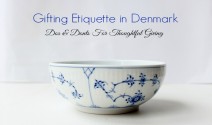
Copenhagen gives this gift a distinct design context. A recognisable local reference is the sculptural pour-over associated with Husk Coffee, whose restrained profile works as coffee equipment and as tableware. Porcelain or high-fired ceramic feels substantial in the hand, retains heat well and pairs easily with a hand grinder, glass server and plain cup. The reward is repeated use: the object settles into a morning routine instead of becoming one more decorative purchase.
That wider Copenhagen lens is useful when judging whether an object feels genuinely Danish or merely Scandinavian in styling. For more local finds with the same clean, useful character, the site’s Explore Denmark collection offers a quick route through Copenhagen-linked products. The dripper becomes more convincing when its material, proportions and purpose agree, rather than when a flag is printed on the box.
Porcelain also brings a gentle tension to the gift. It can chip or crack, particularly if it is knocked against a sink or filled with cold water while hot. A quality design should have a wide, stable foot and a filter-supporting rim; senders should keep the original moulded packaging for the same reason. For a recipient who values restrained objects and careful rituals, that fragility belongs to the charm.
Match the Dripper to the Barista's Daily Routine
A café professional and a home barista may use the same words but work to very different rhythms. Someone serving espresso throughout a busy Melbourne shift needs speed, consistency and a workflow built around a grinder, machine, knock box and milk station. A manual cone offers almost none of those advantages. Present it as a personal gift for brewing at home, not as a tool that will improve their professional café performance.
Australian home coffee habits tend to develop through a mixture of café inspiration and practical constraint. Sydney’s flat-white culture makes milk drinks and espresso-based recipes familiar, while Melbourne’s strong specialty-café scene encourages experimentation with origins, ratios and hand brewing. In Brisbane and other fast-growing cities, an active roster of specialty roasters has made beans, filters and compact brewing equipment easier to find. These are useful clues to the gift, even when the recipient lives somewhere else.
Their existing setup provides the clearest guide. A one-to-two-cup brewer should fit an everyday paper-filter cone, while a larger model may suit someone sharing a kitchen or preparing several mugs. Check whether the brewer works with standard No. 2 filters, whether its rim supports a paper filter without slipping, and whether a matching server is available. A compact design is particularly welcome in Australian apartments, where counter space competes with lunch-making, dish racks and small appliances.
Porcelain Performance, Craft and Careful Use
Porcelain’s thermal mass can encourage a thoughtful preheating routine. Warming the cone with hot water helps prevent a cool brewer from abruptly lowering the water temperature, while the smooth interior makes it easier to rinse away grounds between brews. Porcelain does not guarantee a better cup by itself; grind size, dose, water temperature, pouring technique and the brewer’s geometry remain central to extraction.
The internal ridges and drainage pattern deserve close attention. Well-spaced ribs hold the paper away from the wall, encourage airflow and help spent coffee stay loose beneath the filter. A brewer that restricts flow too aggressively can encourage bitterness, while an unrestricted cone may produce a thin, fast brew. After use, remove the paper, rinse the interior and clean the channels with a soft brush. Follow the maker’s care instructions, especially for glazed surfaces, and avoid sudden temperature changes that could stress the ceramic.
If the maker matters to the recipient, the story behind the object can be part of the gift. A related Khanyi Mbau profile pairs well with a note about craftsmanship, creative work and maintaining balance, giving the brewer a more human context than packaging alone can provide.
In Australia, food-contact claims deserve particular attention. FSANZ Standard 1.4.3, Articles and Equipment in Contact with Food, covers requirements for ceramic food-contact items, including limits on lead and cadmium migration from glazes. Australian Consumer Law also requires sellers to avoid misleading safety or origin claims. Look for clear material information and compliance declarations, particularly when ordering directly from Europe. A stylish photograph alone cannot establish that a glaze is suitable for hot water or repeated food contact.
Turn the Dripper into a Complete Gift
A single cone can look slightly lonely in a gift box. A useful bundle gives the recipient an immediate reason to begin, without filling the package with redundant equipment. Filters and a small bag of freshly roasted beans create the simplest combination, while a brewing card can explain the basic recipe: rinse the filter, add the coffee, settle the bed, pour steadily and let the brewer drain.
For someone who treats coffee as a craft, a work apron adds warmth and usefulness. The Danish apron brands guide provides a useful starting point for a linen or cotton option that suits a home barista. Choose breathable fabric, secure pockets and a length that can be adjusted comfortably. It should feel like part of the brewing ritual rather than a novelty uniform.
Presentation should protect the porcelain as carefully as it celebrates it. Use the moulded packaging, add soft padding around the cone and keep any kettle or server in its own protective sleeve. Include the receipt and a digital copy of the care instructions for international purchases. A handwritten note naming the beans, the roast date and the brewer makes the gift personal while giving the recipient a clear first brew to try.
Buy with Confidence and Make the Ritual Complete
The Australian market for this equipment usually divides into local specialist retailers and imported design pieces. Seven Seeds in Melbourne, Campos in Sydney and Coffee Supreme in Brisbane are among the roasters known for carrying adjacent brewing equipment, although an exact Danish porcelain model may require a European design store or an online importer. Design shops, museum stores and online marketplaces can provide alternatives, so compare the dimensions and included accessories rather than relying on product names.
Local stock offers easier returns and fewer delivery complications. A European purchase may provide better availability or a distinctive glaze, but the final Australian price can include currency movement, freight, insurance and taxes. Porcelain is particularly vulnerable to damage in transit, making tracked shipping and a clear returns policy worth checking. Buying an Australian 220–240 V kettle locally is also sensible unless the imported model has the correct plug, voltage and safety certification.
Choose by routine, not by appearance alone. Match the cone size and filter type to the recipient’s existing setup, add correctly sized filters or a useful bag of beans, and select a dripper whose finish reflects their kitchen. Then give it as an invitation to brew slowly and share the result. A well-chosen Danish porcelain pour-over can turn an ordinary coffee break into a ritual worth sharing.