











.png)
Copenhagen's Best Vintage Stores for Enamelware
Copenhagen has long been spoken about as a mecca for design lovers, and the Danish capital's obsession with craftsmanship makes it a particularly fertile hunting ground for anyone chasing vintage enamelware. The city's relationship with this humble material stretches back over a century, with makers like Dura, Enamel and Holmskov turning out mugs, plates, casseroles and measuring jugs that still turn up in flea markets and curated vintage shops today.
For Australian readers planning a European getaway or simply dreaming of a piece of Danish design for the kitchen bench, the rewards are worth the long-haul flight from Sydney or Melbourne. Enamelware sits beautifully within the slow-living aesthetic that has taken hold across Surry Hills terraces and Fitzroy warehouses, and its practical nature - lightweight, hard-wearing, oven-friendly - makes it ideal for everything from a Bondi barbie to a winter soup by the heater.
Why enamelware has become a quiet obsession in Australian kitchens
Australian homes have always had a soft spot for hard-wearing kitchenware, but enamelware has shifted from nostalgic camping kit to a genuine design object over the past decade. The shift has been particularly noticeable in design-conscious neighbourhoods like Newtown and Brunswick, where vintage shops on King Street and Sydney Road regularly see Danish enamel mugs and speckled plates snapped up within hours of hitting the shelves.
Part of the appeal is the material itself. Enamelware is essentially steel coated in glass, which means it shrugs off the rough treatment that would send a ceramic mug to the bin. For Australians, that practicality aligns beautifully with a national appetite for outdoor living - enamel cups are perfect for a Bunnings sausage sizzle or a long weekend at Wilsons Promontory, and they don't mind if they get tossed in the back of the ute with the fishing rods. The colour palette - milky white with cobalt rims, soft greys, the occasional mint or marigold - photographs beautifully against the eucalyptus tones of an Australian landscape.
The collector market here is quietly thriving. Australian vintage dealers report strong demand from interior stylists working on coastal renovations, and even online marketplaces like the local eBay show steady bidding wars for rare Danish pieces. The overlap between the slow-food movement, the popularity of ceramics and pottery classes in Melbourne's inner north, and a renewed interest in heirloom objects has created the perfect conditions for enamelware to flourish.
Neighbourhoods worth wandering before you step inside a shop
Copenhagen is a compact city by Australian standards, and most of the best vintage shopping is concentrated in a handful of walkable neighbourhoods. Spending an afternoon drifting between them is half the joy - you will spot more pieces in the windows of small design shops than in any single emporium.
Vesterbro is the obvious starting point. Once a rough quarter, it has gentrified into a creative hub bristling with coffee shops, galleries and small design stores. The streets around Istedgade and Halmtorvet are studded with vintage dealers, and you will often find the best enamelware in the back rooms of shops that look, from the outside, like they sell only mid-century furniture. Nørrebro, to the northwest, is similarly eclectic - multicultural, slightly grungier, and home to several of the city's most respected design stores.
Frederiksberg offers a calmer browse, with tree-lined streets and a more curated feel. Indre By, the old city centre, is where you will find the more established antiques dealers, some of which have been trading in the same spot for generations. If time allows, a detour to Frederiksberg Have or a coffee on Gammel Kongevej turns a shopping trip into a proper hyggelig afternoon. Danish design is as much about the experience of looking as it is about the purchase.
Comparing Copenhagen's most beloved enamelware destinations
Not all vintage shops in Copenhagen approach enamelware the same way. Some specialise in industrial and post-war pieces, others focus on rare colourways, and a few are generalist design stores where enamelware sits alongside ceramics, textiles and lighting. The table below compares five of the most rewarding destinations for collectors.
| Store | Neighbourhood | Speciality | Price Range (per piece) | Best For | International Shipping |
|---|---|---|---|---|---|
| Stilleben | Nørrebro | Curated Scandinavian design with strong vintage edit | AUD $80–$400 | Statement pieces and rare colours | Yes, worldwide |
| Rumstilleriet | Vesterbro | Mid-century Danish furniture plus kitchenalia | AUD $25–$150 | Affordable everyday mugs and plates | Yes, insured |
| Birthe Kitten | Frederiksberg | Antiques and decorative arts across eras | AUD $60–$350 | Heirloom-quality casseroles and jugs | Quotes individually |
| Antik & Design | Indre By | Large-scale antiques dealer, multiple rooms | AUD $40–$500 | Volume shopping and unusual sizes | Arranged on request |
| København Vintage | Vesterbro | Everyday vintage, accessible pricing | AUD $15–$90 | First pieces and gifts | Yes, standard rates |
Each of these shops has its own rhythm. Stilleben is the place to visit if you care about provenance and are happy to pay for it; Rumstilleriet is better for browsing without pressure; Birthe Kitten rewards patience. The right shop depends entirely on what you are after, and most serious collectors end up visiting all five over the course of a long weekend.
Hallmarks, chips and colours: what to look for before buying
Enamelware is a forgiving material, but the difference between a bargain and a regret often comes down to a few minutes of careful inspection. Australian buyers who have been collecting for years recommend turning each piece over and looking for the maker's mark stamped on the base or rim. Dura, Enamel Kødbyen and Holmskov are among the most coveted names; pieces without marks can still be lovely, but they rarely command the same prices.
Colour is where the real magic lies. Classic white with a navy or cobalt rim is the bread-and-butter look and the safest choice for a curated shelf. Speckled finishes - often called "mågeæg" or seagull egg - are highly sought after and tend to be older, frequently from the 1950s. Pastels like dusty pink, mint and pale blue tend to fetch the highest prices, particularly when they appear on casseroles or larger serving dishes.
Signs of quality to check before committing:
- Even enamel coverage with no bare patches, especially around the rim
- Hairline cracks rather than chips - chips add character, cracks compromise structure
- Warping on flat pieces, which makes them unstable on a modern stovetop
- Original handles and lids, as replacements are almost impossible to source
Condition is subjective, and Australian collectors tend to be more relaxed than their European counterparts. A small chip on the rim of a 1960s Dura mug is widely considered part of the patina and rarely affects value significantly. Structural damage - cracks, deep rust, broken handles - is another matter entirely and should be reflected in the asking price.
Shipping, GST and the reality of posting heavy kitchenware home
Australians shopping in Copenhagen need to think practically about how their treasures will get home. A single enamel mug is light enough to slip into a suitcase, but a set of mixing bowls or a large roasting pan can quickly become a burden in luggage. Most of the serious vintage shops in Copenhagen offer international shipping, but the costs vary considerably and are worth factoring in before you fall in love with a piece.
Denmark sits outside the European Union's mainland for shipping purposes, and parcels bound for Australia typically travel via DHL or PostNord. The Australian Goods and Services Tax threshold of AUD $1,000 applies to imported goods, so anything valued below that line will generally sail through customs without duty, though the GST will still be collected on items over AUD $1,000. Fragile items need extra insurance, and most shops will provide a quote that includes packing in recycled newspaper - a very Danish touch that also happens to be highly effective.
For anyone timing their trip around the Danish design calendar, our roundup of Danish planner designs covers the year's most anticipated releases, from paper goods to seasonal exhibitions. For those who cannot make the trip, several Copenhagen stores maintain well-photographed online catalogues and will hold pieces for a few days while you decide. It is also worth checking Australian-based resellers who import Danish vintage, as they handle the logistics and offer local pickup from Sydney, Melbourne or Brisbane. The prices are higher to reflect the curation and freight, but the convenience is hard to beat when you are after a single specific piece.
Pairing enamelware with other Danish design finds
One of the pleasures of shopping for enamelware in Copenhagen is the way it leads naturally into other Danish design discoveries. The same shops that stock vintage kitchenalia often carry complementary pieces - hand-thrown ceramics, wooden cutting boards, mid-century glassware - that make the collection feel cohesive rather than cluttered. Australian interiors benefit enormously from this layered approach, particularly in open-plan kitchens where a single shelf can carry the whole story.
A few complementary Danish finds worth considering alongside enamelware:
- Royal Copenhagen or Kähler ceramics for a more formal dinnerware contrast
- A Georg Jensen serving piece for special occasions
- Vintage Danish linen tea towels in classic blue and white
- A small wooden board from a Jysk factory seconds shop for daily use
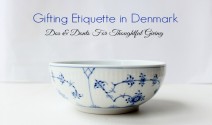
For those interested in branching further into Danish design culture, our guide to Danish porcelain gifting explores the country's porcelain heritage in depth. Together, these pieces paint a picture of a design tradition that prizes both beauty and longevity - exactly the qualities that make vintage enamelware such a rewarding corner of the market.
If the thought of returning home with a dented suitcase and a bag full of speckled mugs appeals to you, start sketching out your Copenhagen itinerary today. Subscribe to The Orange Gift Bag for more Scandinavian gift guides, neighbourhood walks and slow-design inspiration delivered to your inbox each month, and check back as new vintage discoveries from the Danish capital are added throughout the year.